

Everything I know about social media for political campaigns can be traced back to one night: standing in a packed room, stomach in knots, phone pressed to my ear, waiting on election results.
My client Joey was running for mayor in the 2025 municipal election. Three months before election day, he’d come to me and said, “I’m running for mayor. Can you help me get the word out?” So we worked our tails off, and now here we were, and I was fairly certain I was going to pass out from holding my breath.
He won with 69% of the vote.
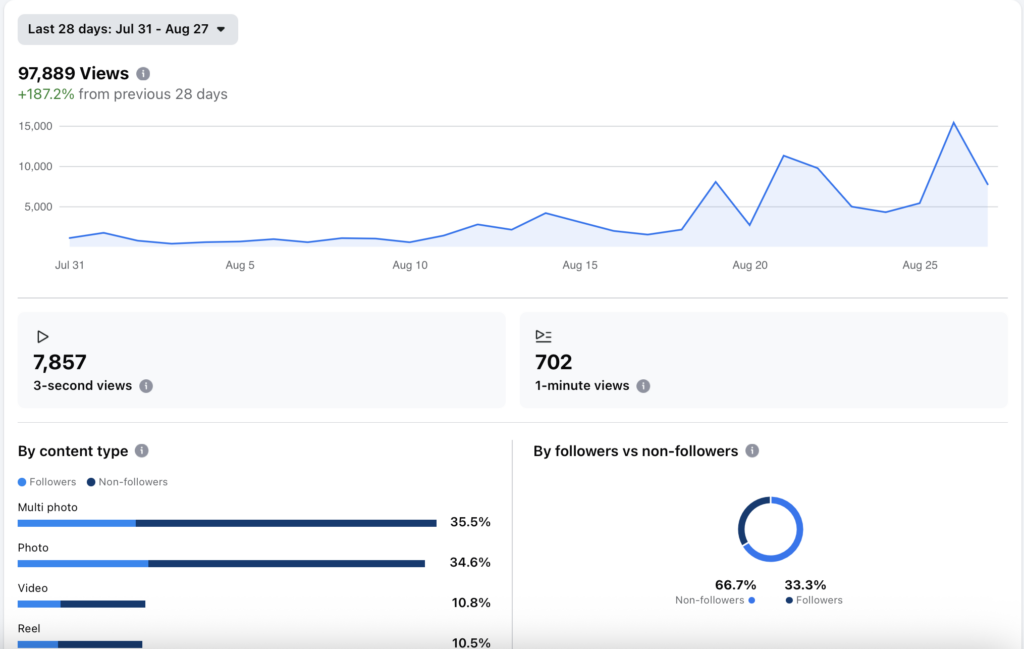
What follows is exactly how we used social media for political campaigns in that race: the strategy, the content, and the actual analytics from his account, including 97,889 views in the final 28 days and one finding about content that I did not expect.
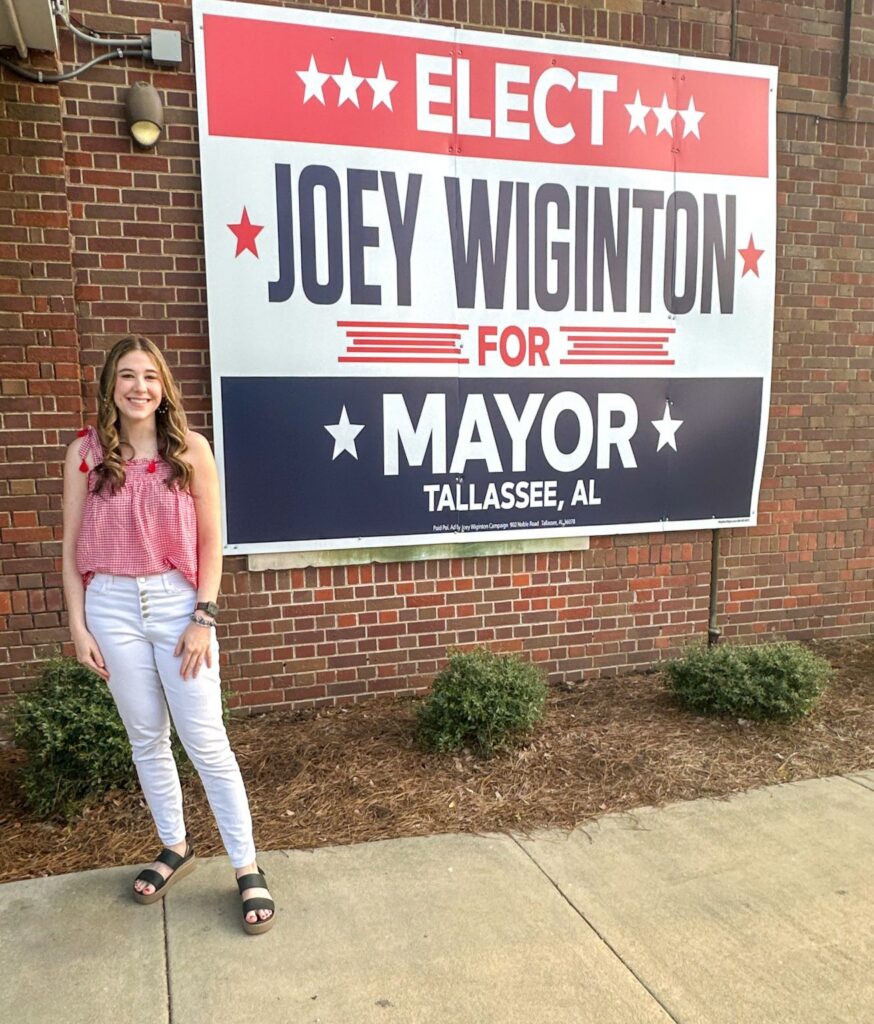
TL;DR — Social Media for Political Campaigns
- The candidate: Joey, a first-time challenger running against a well-known incumbent, with three months to go and no strategy in place.
- The budget: Zero dollars on ads (on purpose).
- The strategy: Hyperlocal storytelling and behind-the-scenes personality content. Facebook first, Instagram and email behind it.
- The reach: 97,889 organic views in 28 days, up 187%, with 66.7% coming from people who didn’t follow him.
- The surprise: Photos and carousels drove 70% of all views. Reels drove 10.5%.
- The outcome: He beat the incumbent with 69% of the vote.
How Social Media for Political Campaigns Actually Works
Social media for political campaigns builds name recognition with voters who don’t know the candidate yet, then gives them a reason to trust him before they ever think about the ballot.
Here’s what that looked like in this race:
Joey was the challenger because the incumbent was already well known. We had three months and no strategy in place, and it seemed pretty overwhelming.
So we picked one hub. We hosted events people actually wanted to go to, showed him around town with business owners and neighbors who were excited about him, and got his supporters posting in local Facebook groups about why it mattered.
We didn’t run a single paid ad, which blows the minds of a lot of the other marketing strategists I talk to.
He pulled 97,889 organic views in 28 days, 66.7% of them from people who weren’t following him, and won with 69% of the vote.
What Joey Was Working With
Joey had a lot going for him. Deep roots in the community, a clear idea of what he wanted to change, and a historic theatre downtown that he and his wife had restored themselves.
What he didn’t have was a way to reach anybody who wasn’t already in his circle. He was also running against an incumbent that everybody in town already knew, which was a challenging position.
The standard “playbook” for a local race is yard signs, door knocking, and a Facebook page that like 30 people follow. But all of that would have reached people who were already going to vote for him anyway. None of it reaches the person three neighborhoods over who’s never heard his name.
The problem was never whether he was qualified. It was whether anyone knew he existed.
A quick note before we go further: Alabama municipal elections are non-partisan by law, so neither candidate ran on a party line. Everything below is about visibility and trust, not politics.
Our Social Media Strategy for This Political Campaign
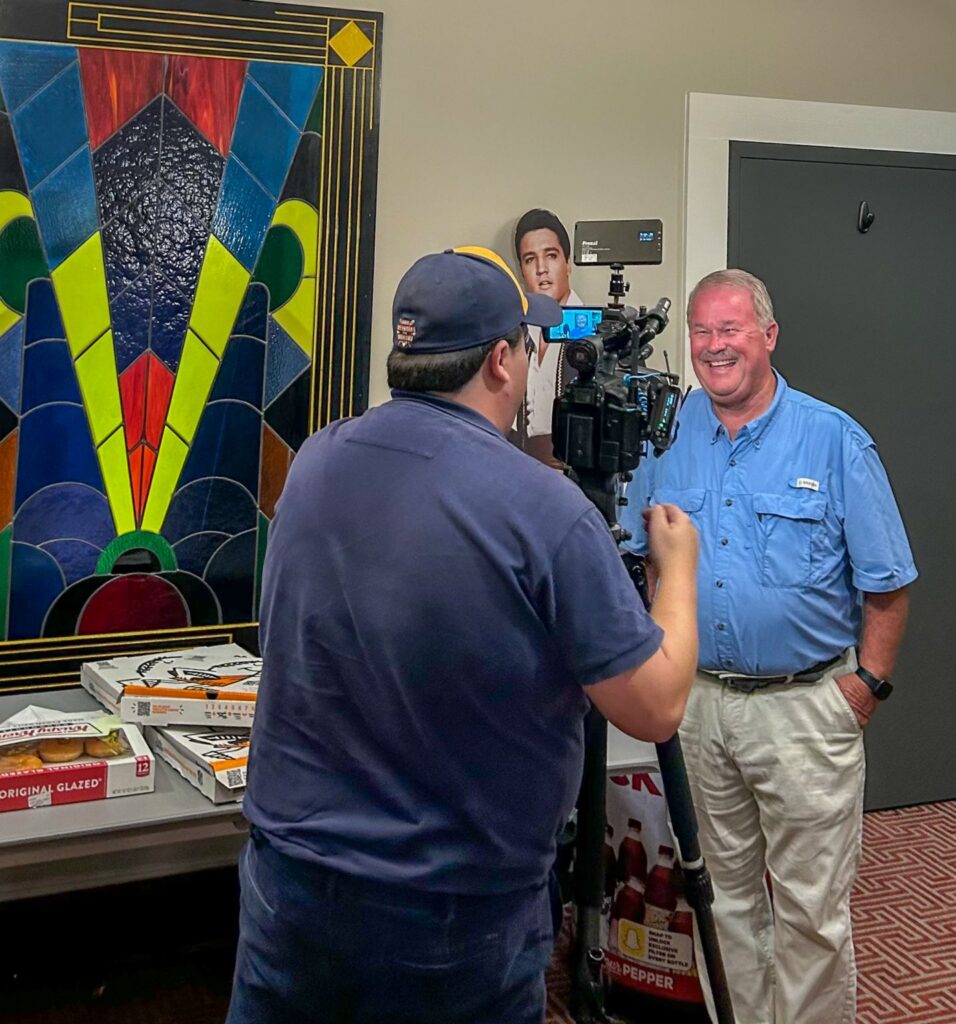
I came on as his CMO and campaign manager three months out. The whole thing was built on hyperlocal storytelling: Joey, in real places, with real people. Facebook was the primary platform, with Instagram and email carrying the same message.
Everything Centered on the Theatre
Joey and his wife own and restored the Mount Vernon Performing Arts Center in town, and it turned out to be the most valuable thing he had.
A theatre is a place people walk into. I know that sounds obvious, but it changes everything about how you make content, because now every event you host gives you something to post, and everything you post points back to the same address.
That’s what a hub does. It gives your marketing somewhere to send people.
Yours doesn’t have to be a building. It can be a recurring event, a partnership with a local business, or a weekly livestream.
The Events Had Nothing to Do With Politics
A few weeks before the election, the theatre hosted an Alabama Has Talent show as well as an Elvis tribute night. (I need you to understand that these Alabama ladies go absolutely feral for Elvis.) Every velvet seat in that room was taken.
He knew his audience. And he knew what would draw a crowd.
Both events filled the room with people who came for the show, had a genuinely good time, and left having shaken hands with the guy who made it happen. And during the show, Joey had the opportunity to introduce himself and share about why he was running for mayor, what he’d like to change, and how they could vote for him.
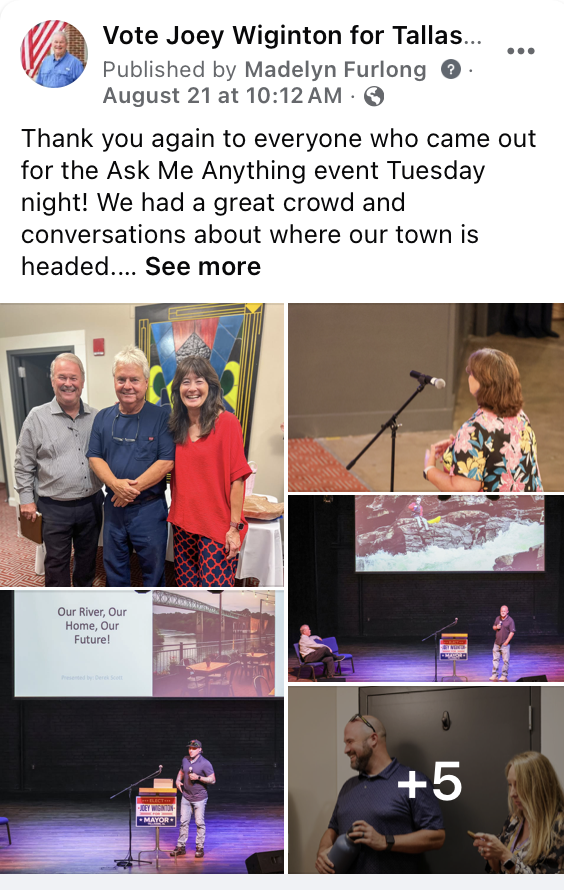
The week after those events, Joey held an Ask Me Anything night. It was in the same room, with a lot of the same people, except now they’d already met him once and showed up with actual questions.
He Borrowed Other People’s Audiences
Joey got local restaurant and business owners behind him, then made videos with them and went on their podcasts. Every one of those small business owners put him in front of an audience that already trusted the person standing next to him.
He also got his own supporters posting: not just event photos, but WHY they were backing him and what they thought it would change. They went into local Facebook groups, which in a small town is where the actual conversation happens (and let me tell you, some of those posts got heated).
A recommendation from someone you already trust does more than any ad. That’s true in a mayoral race and it’s true for a service business.
It Could Not Look Polished
Remember how I said we knew Joey’s audience?
Let’s talk about that some more.
The content couldn’t be glossy. It had to look like it came from inside the town, not from a strategist outside of it. Every time something felt too produced, we saw a dip in the analytics.
We skipped attack content aimed at the incumbent entirely, and we didn’t lean on policy-heavy posts either. We focused on helping people get to know him and see how much he was already part of the community. Then, when he did lay out where he stood, it worked, because by then people already knew who was talking.
The Numbers From This Political Campaign
Here’s what came straight out of Joey’s account. It’s all organic; nothing is boosted:
- 97,889 views in 28 days during the final stretch
- A 187% increase over the previous 28 days
- 66.7% of those views came from people who weren’t following him
- 32,986 views in a single two-week window, up 236% over the two weeks before
- One thank-you post after an event pulled 10,000+ on its own
- 69% of the vote, against a sitting incumbent
The one I’d like you to remember is the 66.7%. Two-thirds of everything that got seen was by someone who didn’t follow him.
Your own followers already have your sign in their yard. The two-thirds who didn’t follow him are the ones who decided the election.
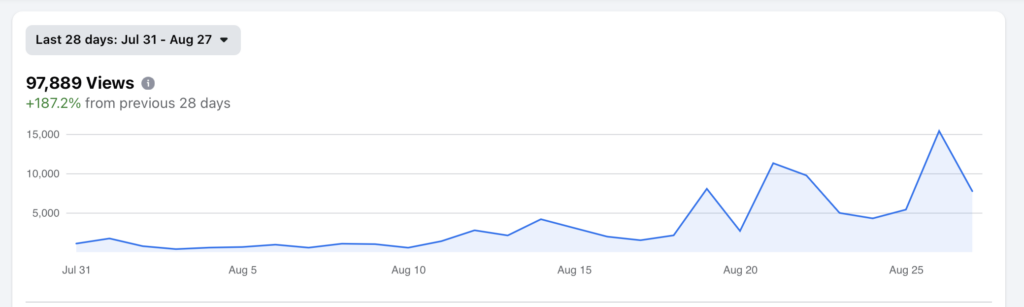
And in a town this size, 97,889 views means the same set of faces seeing him over and over until he stopped being a stranger.
The Content Type That Surprised Me
Here’s the breakdown of what actually drove those 97,889 views:
| Content type | Share of total views |
|---|---|
| Carousels (multi-photo) | 35.5% |
| Single photos | 34.6% |
| Video | 10.8% |
| Reels | 10.5% |
Content type breakdown for a mayoral campaign account, 28 days, 97,889 total views.
Photos and carousels: 70% of everything. Reels: barely a tenth.
I expected the opposite. If you go on Instagram, almost every account will say reels are the only format worth making right now, and I’ve built plenty of client strategies where that assumption was true. But on this account, over this stretch, photos of a candidate standing in rooms with actual people beat video seven to one.
We still made reels for Joey. It was important for them to hear his voice and see his face. But it changed how I think about the format. People wanted to see which businesses supported Joey, if he was out in the community each day, if he was learning more about what needs to be done.
And it was easy peasy to get those pictures because he was already shaking hands, standing at podiums, showing up at the fish fry. The content is happening whether you film it or not. So photograph it.
What This Means If You’re Running a Political Campaign
If you’re running for a political office, here are a few takeaways:
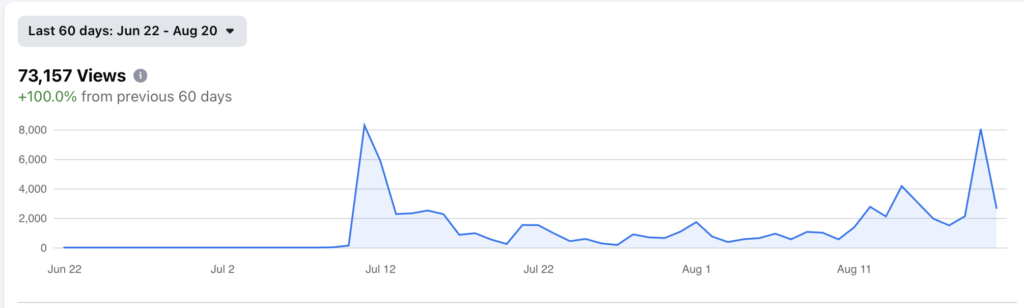
Start before it feels reasonable. For the first few weeks we posted consistently and almost nothing happened. The numbers barely moved, and it genuinely felt like it wasn’t working. Then it started climbing, and the biggest jump of the whole campaign came in the final month. That lag is normal. It’s also why a campaign that starts six weeks out never sees the payoff: they either quit during the flat part or run out of time before the climb starts.
Post pictures of actual people. Not graphics with your slogan on them, not a stock photo of a flag. Crowds, handshakes, the fish fry, the Elvis night at the theatre.
Get other people to vouch for you. Business owners, neighbors, anyone with their own audience. Borrowed trust moves faster than anything you say about yourself.
Don’t out-polish the town. If your content looks like it was made somewhere else, people can tell.
Answer your comments. In a local race the comment section is a town hall, and people absolutely notice who shows up in it.
If You’re Not Running for Office
Most of my clients are service providers and coaches. Most of the time, I’m not working with anyone running for a political office.
But almost every one of them is in Joey’s exact position: competing against somebody bigger, better known, and further along. A competitor with more followers, more years in business, more built-in credibility.
Getting a small town to trust a challenger over the incumbent is the same as getting a stranger to trust you over a bigger, better-known competitor. It comes down to one question: why would I pick the person I’ve never heard of?
The answer in both cases is that people picked Joey because they felt like they knew him before they ever thought about the ballot.
So your hub is your Instagram or your email list or your podcast. Your version of the Elvis night is whatever gets people to “come” that isn’t a pitch: a freebie that’s better than what other people charge for, a workshop that fixes one real problem in an hour, an exclusive podcast episode that gives away your top secrets.
Your borrowed audiences are podcast guesting, collaborations, and clients who are your super fans. What beat a well-funded incumbent was consistency, specificity, and showing people he actually cared.
Want an overview of what the actual process of working with me looks like — from how content gets off your plate to what changes in the first 30 days? Click here to read a short blog post about it!
Frequently Asked Questions About Social Media for Political Campaigns
How is social media used in political campaigns?
It builds name recognition with voters who don’t know the candidate yet, promotes events, and lets supporters carry the message into places like local Facebook groups. In the race above, organic content produced 97,889 views in 28 days, and two-thirds of that came from people who weren’t following the account.
Can you win an election without spending money on social media ads?
Yes. This campaign ran zero paid ads and won with 69% of the vote against a sitting incumbent. Skipping ads was deliberate: the budget went elsewhere, and it forced us to build actual trust instead of buying reach. Local races can still compete on organic in a way larger races generally can’t.
What social media platform is best for a political campaign?
Facebook, for most local races. It was the primary platform here, with Instagram and email behind it. Pew Research Center puts 71% of U.S. adults on Facebook and roughly half on Instagram, so for a mayoral or city council seat that’s close to everyone who can vote.
How does a challenger beat a better-known incumbent?
By being visible and specific long enough that voters feel like they know you. This candidate skipped attack content and policy-heavy posts, and instead showed up constantly in real places with real people, backed by local business owners who vouched for him publicly.
Timing, Team, and Format
Does a political campaign need a social media manager?
It depends on the size of the race and how much time the candidate has, which is usually none. Campaigning is already a full-time job, and posting consistently is the first thing to slip. I came on this one as CMO and campaign manager three months out.
Do reels perform better than photos for political campaigns?
No! Not in this campaign, anyway. Photos and carousels drove 70% of all views while reels drove 10.5%. Campaigning throws off a lot of natural photo opportunities, and that content outperformed produced video by a wide margin.
When should a campaign start posting on social media?
The earlier the better. This account sat nearly flat for the first three weeks of a 60-day window before anything moved, then jumped 187% in the final month. Three months out was enough here, but content needs runway to compound before election day.
Why Social Media for Political Campaigns Keeps Paying Off
Here’s the part I didn’t see coming.
Joey still sends me people. Anytime he meets somebody running a campaign, he tells them to call me. That’s from work we wrapped up a while ago, and it hasn’t stopped.
That’s what visibility actually gets you: not just the win on election night, but everything the win keeps giving after. I think that’s what people miss when they wonder if marketing is worth it. They’re adding up what they got this month, instead of what it’s worth to finally be known.
If you’re running a campaign, or running a business against somebody bigger than you, that’s the work I do. I handle social media management for candidates, service providers, and coaches who need people to know they exist.
Madelyn Victoria is a fractional CMO and the founder of Madelyn Victoria Co., where she helps service businesses get visible and bring in consistent leads without doing the marketing themselves. She builds the strategy and runs it herself — social media, email, and Showit websites.


+ show Comments
- Hide Comments
add a comment