

In one month, Agape of Central Alabama reached 17,688 people and got their videos watched 3,323 times, almost six times more than the month before. Agape is a nonprofit in Montgomery that works in foster care, adoption, and pregnancy support. A lot of their growth came from social media storytelling. We share real stories with a hook good enough to stop someone mid-scroll.
I’m Madelyn, a fractional CMO for service providers, and Agape is one of the accounts I manage. I build out their social media strategy and then do all the work myself.
I’m going to walk you through everything that’s working: how I turn Steve’s speaking engagements into reels, how we tell stories without ever breaking confidentiality, the recap posts their donors love, and the educational posts that get them found on Google and ChatGPT.
TL;DR
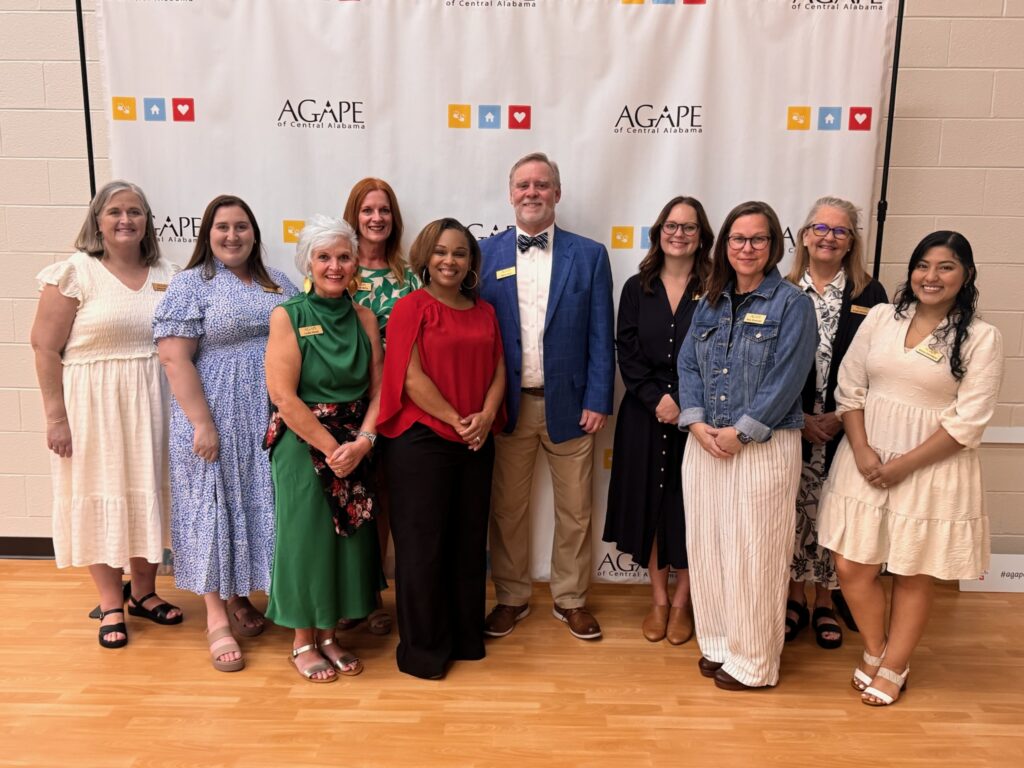
The client: Agape of Central Alabama, a Montgomery nonprofit for foster care, adoption, and pregnancy support.
The constraint: Strict confidentiality around the children and moms they serve, so most of their best stories can’t be shown the usual way.
The strategy: Social media storytelling. That means story-first reels, one strong hook per post, and educational content built around what people already search.
The outcome: In one month, 76% more reach, an engagement rate over 8%, and more people reaching out to get involved.
WHY WE LEAD WITH REAL STORIES
By far, storytelling is what works best on this account, and Agape has so many good ones to tell. I love finding and sharing stories on any account I manage because they pull people in and connect.
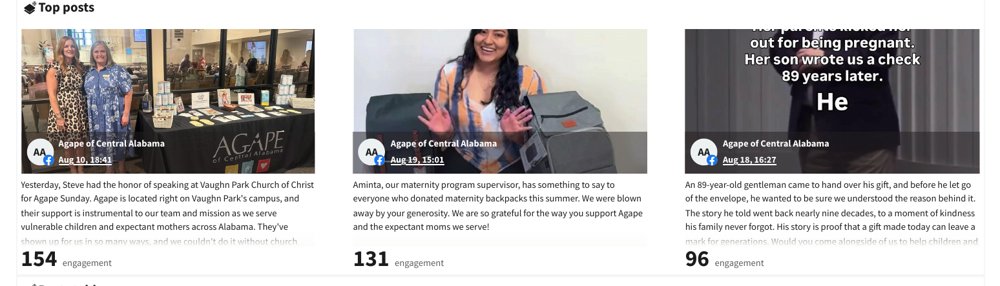
Here’s a reel I posted for them recently that shares a profound story. An 89-year-old man came into the office to hand over a gift, and before he’d let go of the envelope, he wanted to make sure Agape understood why he was giving it. Almost 90 years ago, his grandparents had kicked his mother out of the house for being pregnant, and someone showed her kindness when nobody else would. He never forgot it. So he wrote Agape a check decades later, because of one act of grace that happened before he was even born.
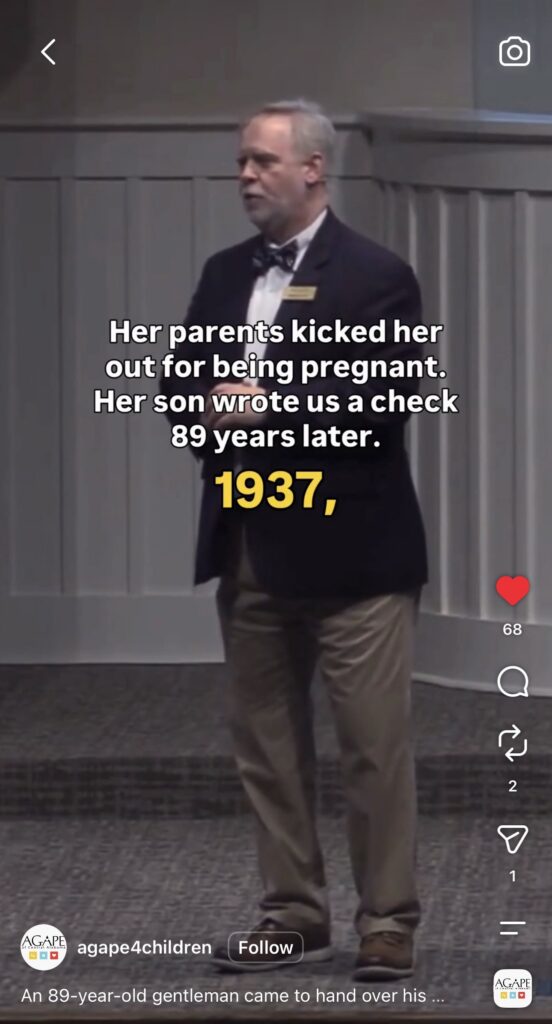
I put all of that into the reel, clipping it so it started with a verbal hook in the first couple of seconds and adding a hook on the screen so it stops the scroll even on mute.
The hook: “Her parents kicked her out for being pregnant. Her son wrote us a check 89 years later,” made people instantly curious.
Then, for the call to action, we invited people to come alongside Agape and give, and pointed them to the link in the bio. I use the same format in almost every impact story: a hook that grabs attention in the first three seconds, a story that shows the work, and one clear next step at the end or in the caption.
You may not run a nonprofit, but you have stories like this, too. Maybe it’s the client who came to you at their lowest and is thriving now, the problem everyone swore couldn’t be fixed until you fixed it, or the reason you started this business in the first place. Those are the stories worth telling, and most business owners let them sit unspoken.
HOW I TURN ONE SERMON INTO A WEEK OF REELS
Agape’s executive director, Steve, speaks at churches all over Alabama to share their mission and raise support, and most of those churches livestream their services. So here’s what I actually do with it:
I’ll go into the church’s YouTube or livestream, and I’ll screen record the clips I want to highlight from Steve’s message. Then I’ll crop the wide stage shot down so it fits Instagram. I use keyframes so the camera follows Steve as he walks across the stage, which keeps him centered instead of wandering off. I cut out the long pauses and add closed captions (because a lot of people watch on mute). Then I use the highlight feature to make key words in the closed captions stand out. And I spend a LOT of time on the hook, because even the best story in the world falls flat if you don’t draw people in right away.
If you speak, teach, go live, or get interviewed on a podcast, you’re already making great footage you can easily clip into social media reels. Turning one talk into three or four reels is one of the highest-return things I do for any client!
THE STORIES WE’RE NOT ALLOWED TO TELL
Almost every story Agape shares involves a child or a mom whose privacy has to be protected. We can’t show faces, we can’t use names, and we can’t share details that would let anyone be identified. This is something I take incredibly seriously.
When Agape ran a maternity backpack drive this summer, we never showed a single mom’s face. We showed the backpacks themselves and let a team member explain what they meant, and that post got an amazing response.
You might be in a similar spot, where you have client results you can’t attach a name to, numbers you’re not allowed to publish, or work that happened under an NDA. Same goes if you’re a dentist or a chiropractor and you have to protect patients and follow HIPAA.
Confidentiality always comes first. But this gives me an opportunity to be creative and think outside the box! We feature only the people who’ve given us permission, or we find another way to tell the story without showing who it’s about or breaking confidentiality.
THE RECAP POST DONORS KEEP THANKING US FOR
At the end of every month, we post a recap of what Agape did that month: the churches Steve spoke at, how many maternity backpacks came in, the baby boxes that got filled, benefit dinners they hosted, and more.
Not only does it give us a repeatable series each month (which people and the algorithm both appreciate), but donors want to see where their money went. We’ve had people comment just to say how much they love these posts.
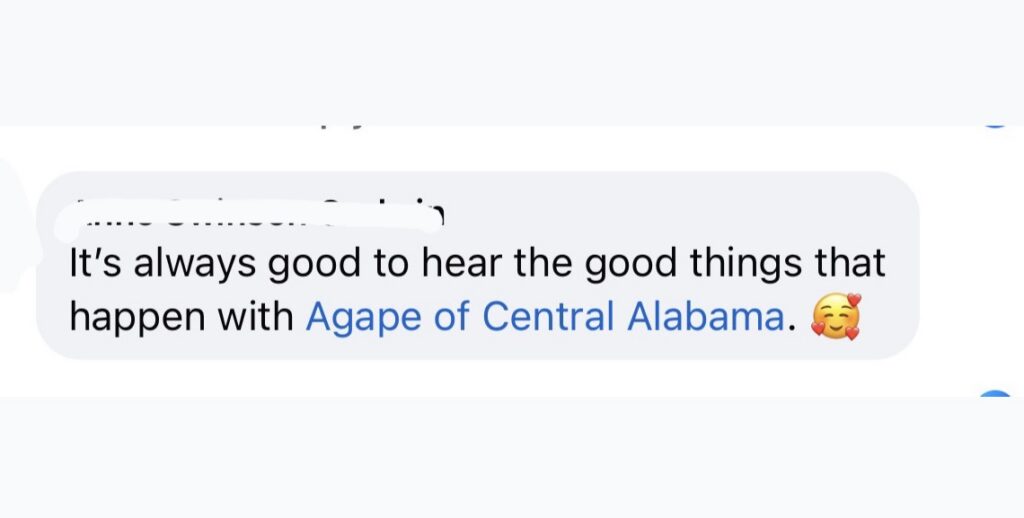
Recap posts are one of my favorite posts to make for any client. In your own recap posts, you can share client wins, a conference or business event you went to, even family milestones. It’s some of the easiest content you’ll make, because you’re just writing down what already happened.
WHAT I’LL FILM AT THE CAFO SUMMIT
Another format we’re leaning into is behind-the-scenes vlogs, because they’re fun to watch and they show how involved Agape really is in the work.
We’re planning to vlog the benefit dinners Agape holds twice a year in different cities. And this month, we’re vlogging the team at the CAFO Summit in Atlanta.
CAFO is the Christian Alliance for Orphans, and its Summit brought more than 2,000 leaders from the foster care and adoption world together in September in Atlanta.
Several team members from Agape are going, and they invited me along, too. I’ll get some great content and film our travel day, some of the sessions, the dinners, and the networking. In the vlog, I plan to switch between talking to the camera and b-roll to keep people’s attention.
This format works for your business, too. People look you up before they ever reach out, and behind-the-scenes content like this makes them feel like they already know you. There are lots of businesses out there, but showing the behind-the-scenes helps people see who you are and what makes YOU different.
THE POSTS THAT GET AGAPE FOUND ON GOOGLE AND CHATGPT
The last type of post we’re making more of is educational content, and it’s one a lot of people skip or get wrong.
Here’s my one caveat for educational posts: always attach an opinion, an experience, or a story to them. Anyone can ask ChatGPT a question and get a basic answer. What we want to do is pull people in and make them want to read the rest.
A recent educational post we shared was called “How to Become a Foster Parent in Alabama,” with subtitle that read “4 steps to getting approved through Agape, and you won’t do any of them alone.” It works for two reasons. First, it gives someone the answer to a question they’ve been wondering about. And second, it helps Agape get found, because “how to become a foster parent in Alabama” is word-for-word what someone searches on Google or ChatGPT.
Let’s talk about that second reason for a minute because it’s actually a really big deal… Instagram shows posts in search now, and tools like ChatGPT are pulling from social media content when they answer a question. So we write these posts the way people actually search, with plain questions and as many specific locations as we can work in. “Foster care in Alabama” is specific and gets found while “foster care” gets buried.
WHAT A MONTH OF STORYTELLING ACTUALLY CHANGED
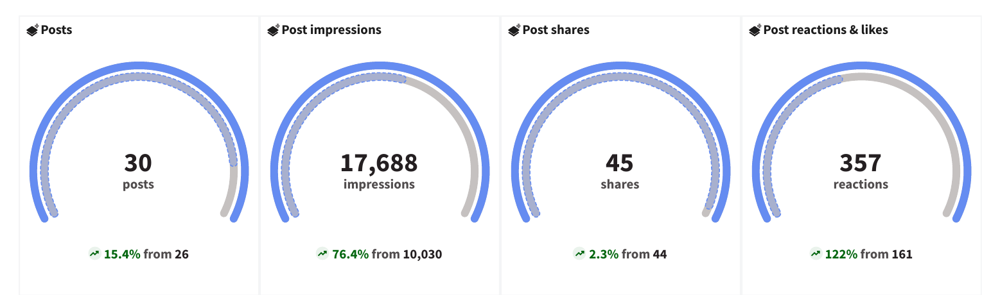
Here’s the month next to a comparison to the one before it. Impressions up 76%. Video views up 589%. Reactions and likes up 122%. Overall engagement up 28%, at a rate over 8%, which is well ahead of the typical nonprofit on Instagram, where the median engagement rate sits under 1%.
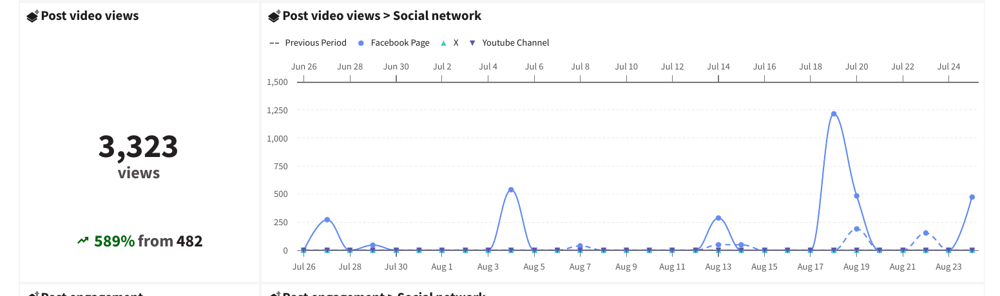
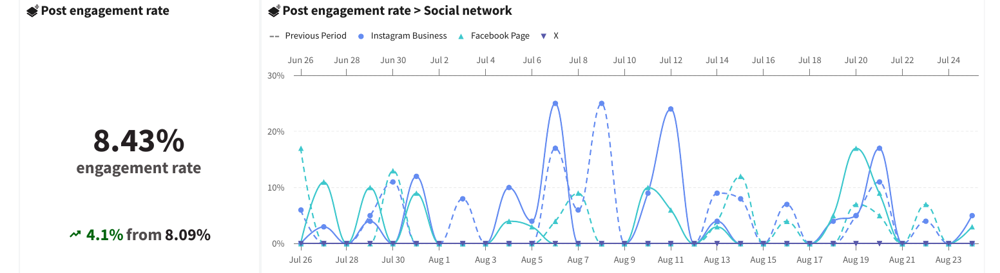
What’s interesting (and worth pointing out) is that Agape’s account reached 76% more people while the follower count stayed steady.
Reach today depends on how watchable and shareable each post is, and your follower count doesn’t factor into it the way it used to. If you’ve been waiting until you have more followers to take your content seriously, you have it in the wrong order! This is something I wish more people knew.
Want an overview of what the actual process of working with me looks like, from how content gets off your plate to what changes in the first 30 days? Click here to read a short blog post about it!
IF YOUR STORIES ARE STUCK IN YOUR HEAD
You easily have a hundred good stories, They come up on client calls, in your DMs, at dinner with a friend, in team meetings. What you don’t have is the TIME to film them, a plan to tell them in the right order, and someone to edit it all so it’s actually good.
That’s exactly what I do for Agape. If you want your best stories to get told so it finds the right people, rather than sit in your head, learn more about social media management here.
QUESTIONS I GET ABOUT SOCIAL MEDIA STORYTELLING
Does storytelling actually work for a small account?
Yes! Agape has 1,000 followers on Instagram, and one month of story-first posts reached more than 17,000 people. How watchable and shareable a post is matters far more than how many people already follow you.
How do you tell client stories without breaking confidentiality?
Carefully, and it’s the first thing I think about. For Agape, we only feature families who’ve given clear permission. When we can’t show someone, we tell the story another way: through a team member who was part of it, the result, or the numbers. If you’re bound by HIPAA or an NDA, it’s the same concept. We build content around what you’re allowed to share and get creative with the rest.
What is social media storytelling, exactly?
It’s using an actual moment, person, or experience to make your point, instead of just stating the point outright. A good story connects emotionally and gives people something to feel and remember, and it’s what makes them stop scrolling, watch to the end, and send it to a friend.
Do I have to be on camera?
Being on camera is great, and it usually performs really well, so I do love using it. But we mix it up and make it as quick and painless as possible. For Agape I use sermon clips, b-roll, staff narration, and reels that are just text on the screen with no talking at all.
Can a fractional CMO run all of this for my business?
Yes! And it’s more than social media. I build the strategy and then run it myself: the content, editing, captions, and scheduling, plus your email, newsletters, and even your website if you need it. You hand it over and it gets done instead of turning into one more thing on your list. Learn more about how I can help here.
How does educational content help me get found on Google and ChatGPT?
It answers real search questions in plain language, using specific services and locations. When someone searches a topic like “how to become a foster parent in Alabama,” search engines and AI tools pull from the post you wrote with those exact words.
Madelyn Victoria is a fractional CMO and the founder of Madelyn Victoria Co., where she helps service businesses get visible and bring in consistent leads without doing the marketing themselves. She builds the strategy and runs it herself — social media, email, and Showit websites.


+ show Comments
- Hide Comments
add a comment